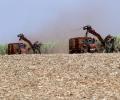
Use of 10 per cent ethanol-blended petrol has led to a saving of over Rs 41,000 crore in the foreign exchange for the country, minister of state for environment, forest and climate change Ashwini Kumar Choubey said on Wednesday. Speaking at an online event of auto industry body SIAM on sustainable mobility, the minister said the government is working in multiple ways to encourage sustainable mobility. "India recently achieved 10 per cent ethanol blending target 5 months in advance, saving over Rs 41,000 crore worth of fuel imports for the nation," Choubey noted.

Japanese auto major Nissan on Wednesday said it is discontinuing Datsun brand in India, nine years after the company kicked off the marque's global relaunch in the country. Having failed in its ambitious global relaunch of Datsun, Nissan had in 2020 discontinued the brand in Russia and Indonesia, the other two countries along with South Africa and India which were marked as key markets targeting the entry level car segment. Confirming the move to discontinue the Datsun brand, Nissan India in a statement said, "Production of Datsun redi-GO has ceased at the Chennai plant (Renault Nissan Automotive India Private Ltd). "Sales of the model still continue (till the stock lasts)."

Auto experts from CarJasoos answer all your questions related to buying, selling or maintenance of new cars.

Equity benchmarks Sensex and Nifty halted their five-day rally on Tuesday and settled deep in the red, mirroring weak global markets, with decline in index heavyweights Reliance Industries, Infosys and HDFC Bank. Despite opening with gains of over 200 points, the 30-share Sensex turned highly volatile and tumbled 709.17 points or 1.26 per cent to close at 55,776.85. During the day, the benchmark index plunged 1,067.07 points or 1.88 per cent to 55,418.95. The broader NSE Nifty also declined 208.30 points or 1.23 per cent to close at 16,663.

Passenger vehicle majors like Hyundai, Tata Motors, M&M, Toyota Kirloskar and Honda on Wednesday reported growth in domestic sales in August riding on festive sentiments, although market leader Maruti Suzuki posted a decline amid a semiconductor shortage affecting the industry. The country's largest carmaker Maruti Suzuki India Ltd (MSIL) reported domestic sales at 110,080 units, as compared to 116,704 units in the same month last year, down 6 per cent. "Sales volume of the company in August 2021 was affected due to electronic components shortage.
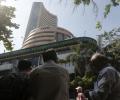
Rising for the fourth straight day, benchmark indices Sensex and Nifty settled marginally higher after a choppy session on Friday, tracking mixed global trends amid uncertainties on the geopolitical front. The BSE Sensex opened weak and declined 414.44 points to 55,049.95 in opening deals. But within minutes, it pared all its losses and jumped 369.56 points to 55,833.95. Facing volatility, the index finally settled at 55,550.30, higher by 85.91 points or 0.15 per cent.
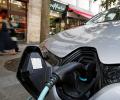
Automobile manufacturers, new and old, as well as ancillary suppliers are set to spend a combined Rs 70,630 crore over the next five years on either entering the electric vehicle segment or stepping up their presence in it. Data culled from announcements made by firms shows India, the world's fifth largest automobile market, is poised to receive one of the biggest capex pushes ever to fuel the transition from internal combustion engines to electric motors and batteries as part of a green drive. The EV push, egged on by the government's emphasis on electric mobility to meet its net zero targets, is expected to yield at least 25 electric vehicles - new ones as well as electrified versions of existing vehicles running on internal combustion engines.

While the company used to report bookings of 4,000-5,000 every day, following the partial lifting of lockdown, in a week, it has received around 6,000.

The country's largest carmaker Maruti Suzuki India (MSI) on Monday reported a 11.8 per cent increase in wholesales to 164,469 units in February. The company had sold 147,110 units in February last year, Maruti Suzuki India (MSI) said in a statement. Domestic sales increased 11.8 per cent to 1,52,983 units last month, as against 1,36,849 units in February 2020, it added.

After the easing of lockdown in mid-May, auto companies were able to resume production in a phased manner, but the ramp-up was slow due to a broken supply chain, and lockdown-induced restrictions.
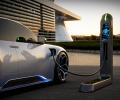
With a million-odd electric vehicles (EVs) - two-wheelers, e-rickshaws, buses and passenger cars - expected to hit the road this calendar year, the shift from gasoline-powered vehicles has become irreversible. Now the question is whether the supply chain is ready for this shift. Key components - the high-powered lithium-ion battery and the cells which go with it, the electric motor, and the electronics powered by chips - account for nearly 60 per cent of the cost of an EV.

We check out the Grand Vitara -- the biggest, most expensive Suzuki in the country.

market mood was also buoyed after China said its Vice Premier Liu He will visit Washington next week for the signing of an interim trade deal. ICICI Bank was the top gainer in the Sensex pack, rallying 3.80 per cent, followed by SBI, M&M, IndusInd Bank, Maruti Suzuki, Asian Paints and RIL.

Besides, Toyota and MG Motor also reported nil sales as they suspended operations even before the imposition of lockdown on March 25 to check the spread of coronavirus. In two-wheeler segment, niche bike maker Royal Enfield said it had zero sales in the domestic market but exported a total of 91 units last month.
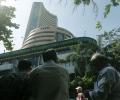
BSE benchmark Sensex plummeted over 388 points to close at 58,576.37 on Tuesday, tracking weakness in index majors Wipro, RIL and Bharti Airtel amid a weak trend in global markets. Investors also remained cautious ahead of crucial macroeconomic data announcements -- industrial production for February and inflation rate for March -- post trading hours. The Sensex declined 388.20 points or 0.66 per cent to settle at 58,576.37. During the day, the benchmark tanked 666 points or 1.12 per cent to 58,298.57.

Automaker Toyota Kirloskar Motor (TKM) on Tuesday said it will increase prices of its entire model range by up to 2 per cent with effect from October 1 in order to partially offset the impact of rise in input costs. The company, which is a joint venture between Japan's Toyota Motor Company and Kirloskar Group, sells a range of vehicles including Innova Crysta and Fortuner in the domestic market. The company will realign the prices of its models, with effect from October 1, 2021, TKM said in a statement.

The global semiconductor shortage hit passenger vehicle sales in September, with major manufacturers like Maruti Suzuki, Hyundai and Mahindra & Mahindra reporting a decline in sales on Friday. Kia India and Honda Cars also reported a dip in wholesales last month as compared with the year-ago period. Carmakers like Tata Motors, Toyota Kirloskar Motor, Nissan and Skoda, however, reported an increase in passenger vehicle dispatches last month despite supply chain issues.

These bikes were all the craze on Day 1 of Auto Expo 2018's media exclusive.

...followed by financial services, IT, and sales and marketing.
The Securities and Exchange Board of India (Sebi) has cleared the draft red herring prospectus (DRHP) of the state-owned Life Insurance Corporation of India (LIC). According to investment banking sources, the so-called final observations were issued by the market regulator on Tuesday evening. Following the market regulator's nod to the IPO papers, the insurer can launch its share sale. However, LIC may not launch its IPO immediately given the current volatile market conditions.

The company further said once the situation was brought to its attention, it made the distributor acutely aware of the "inappropriateness of the action".
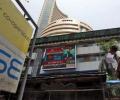
Maruti Suzuki, SBI, HDFC, Hero MotoCorp and Infosys too gained up to 2.55 per cent.
Morgan Stanley Sales & Trading, US, believes the stock is better value for money than others and has a upside as high as 73 per cent. A slowdown in the economy has hit demand and led to a fall in overall consumption in an auto market which till recently was one of the fastest growing in the world.

Automotive (auto) and consumer appliance companies are hoping for a bounty from the harvest season after two consecutive dry spells in 2020 and 2021. The season, which also marks the beginning of the regional New Year, kicked in across the country from April 1 - Gudi Padwa in Maharashtra; Ugadi in Karnataka, Telangana, and Andhra Pradesh; Bihu in the Northeast; and Chaitra Navratri in the North. Manufacturers and retailers of cars, two-wheelers, and consumer appliances said they have seen demand pick up year-on-year (YoY) at a brisk pace across categories.

Recently, TPEM's first born electric concept, Avinya broke cover. The model promises a minimum range of 500 kilometres and advanced technology features, aimed at buyers in India and outside. TPEM, the newly formed entity may also consider a separate dedicated sales channel for the EVs with a distinctive corporate identity once the volumes reach a critical mass and throughput is large enough for the dealers to be profitable, said Chandra. Elaborating further on the hiring strategy he said, "We will hire from everywhere-wherever the talent of the required competency is available."
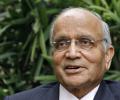
Company managements need to "curtail the kind of expenditures on themselves personally" with the COVID-19 pandemic highlighting the need to build internal resources with a frugal style of functioning, Maruti Suzuki India chairman R C Bhargava said on Tuesday. Addressing shareholders in the company's annual general meeting held virtually, he also termed as "a good development for the whole of industry" recent shareholder actions that did not approve expenditures by management on themselves, without specifying details. In the wake of the pandemic, building internal resources has to become a priority of industry and companies.

The company had launched the Yaris in May 2018 at a price range of Rs 8.75 lakh and Rs 14.07 lakh (ex-showroom), competing with the likes of Honda City, Hyundai Verna and Maruti Suzuki Ciaz. However, it didn't have a robust response in the market, clocking a cumulative wholesales of around 19,800 units.

Size matters on the road. Small is not dominating India's car market any more. The share of cars priced up to Rs 5 lakh in the passenger vehicle market has fallen to 10.5 per cent in the first 11 months of 2021-22, compared with 26 per cent in 2018-19 (FY19), the lowest in four years, according to data from industry sources. Even the share of those in the price range between Rs 5 lakh and Rs 7.5 lakh has dropped to 32.4 per cent in the same period, from 34.9 per cent.

Passenger vehicle market leaders Maruti Suzuki and Hyundai on Saturday reported a decline in wholesales in December 2021, although homegrown majors Tata Motors and Mahindra & Mahindra reported growth, amid semiconductor shortage continuing to impact production. Other manufacturers Nissan and Skoda also reported an increase in December 2021 sales although Honda Cars India witnessed a decline last month. The country's largest carmaker Maruti Suzuki India (MSI) reported a 4 per cent fall in wholesales to 153,149 units in December 2021 as against 160,226 units a year ago.
The country's first ever carmaker, Hindustan Motors, is looking at a second coming. Talks are on for a joint venture with a European auto company focused on the electric vehicle (EV) space. A memorandum of understanding (MoU) has been signed and due diligence is expected to start shortly and will take 2-3 months to conclude.

Maruti Suzukisaid it was trying to offer more factory-fitted CNG cars to address environmental concerns

Tata Motors, Ford, Nissan, Maruti Suzuki, Toyota Kirloskar, BMW, Renault and Isuzu have also announced price hike from next month citing impact of increase in commodity prices and foreign exchange rates.

The company is voluntarily undertaking a recall for WagonR (1 litre) manufactured between November 15, 2018, and October 15, 2019, and Baleno (petrol) manufactured between January 8, 2019, and November 4, 2019, MSI said in a regulatory filing.

Market leader Maruti Suzuki is putting finishing touches to its plan of finding its feet in what is being hailed as a battle of epic proportions in India's fastest-growing passenger vehicle segment, reports Arindam Majumder.

Watch the flash mob that take over Auto Expo 2018.

The muted expectation of dealers come at a time when vehicle manufacturers such as Maruti Suzuki, Hyundai Motor, Mahindra & Mahindra and others reported a double-digit fall in wholesale dispatches to dealerships in July and August.

On the Sensex chart, Bharti Airtel was the biggest loser with nearly 3 per cent drop in its share price. It was followed by IndusInd Bank, Maruti Suzuki, HeroMoto Corp and Tata Steel.
HDFC Bank was the top gainer in the Sensex pack, rallying nearly 4 per cent, Infosys jumped over 3 per cent. Sun Pharma, NTPC, HCL Tech, Tech Mahindra, HDFC, RIL and TCS also closed with gains. On the other hand, Axis Bank was the top laggard, followed by ITC, ICICI Bank, IndusInd Bank and Maruti Suzuki.

Among the Sensex constituents, Tata Motors was the biggest loser with 6.52 per cent fall, followed by Vedanta 5.09 per cent, Bajaj Auto 4.99 per cent, Maruti Suzuki 4.26 per cent and Tata Steel 2.65 per cent.

The company, which sells every second car in the domestic market, said it expected production and sales to grow between 4 per cent and 8 per cent for the financial year started in April.
